
Most early conversations with a client begin in one of two ways. Either the client arrives with nothing: “I am not an architect — I cannot visualise it. I don’t know what I want.” Or they arrive with everything at once: “I want this, and that, and also this other thing — but I can’t decide. What is the best? What should I do?” Both are the same situation. Not a design problem. A clarity problem.
What clients are looking for — before any sketch, any image, any technical answer — is someone they can trust. An expert who will listen, make sense of what they have, and guide them toward a direction they can commit to. That is where design concept in architecture begins: not with a style, but with the confidence to move forward.
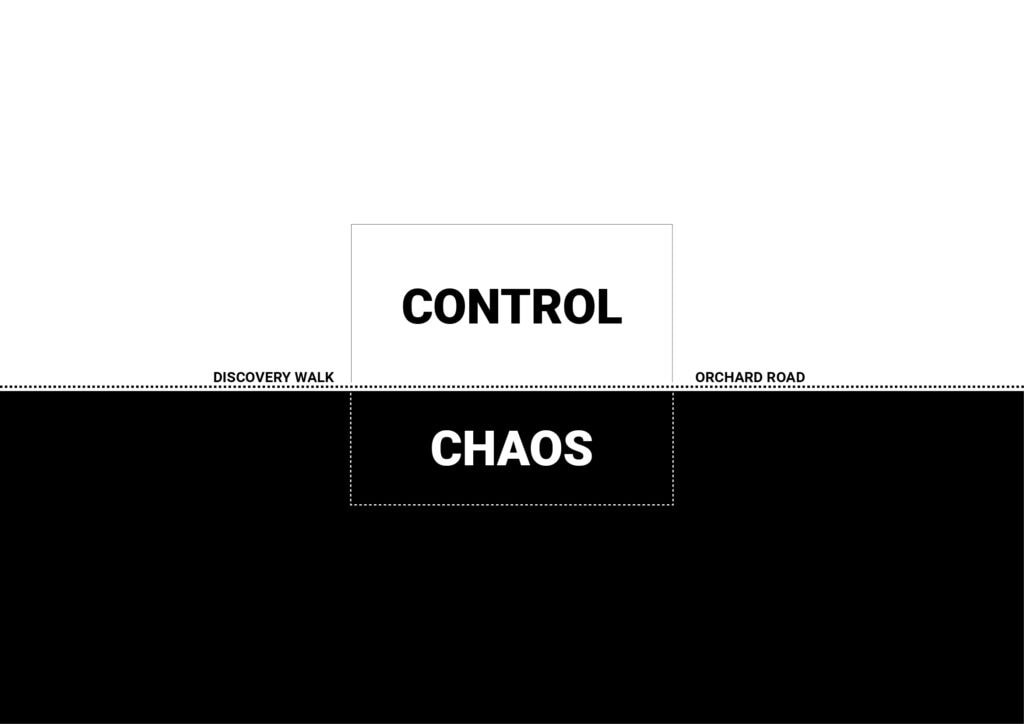
Think of it in simple terms: on one side, chaos — a client’s unresolved ideas, competing priorities, uncertainty about what is even possible. On the other side, control — a clear direction, a shared understanding, decisions made with intention. Design concept in architecture is the work that moves a project from one to the other. It is the structured thinking that determines whether a project will succeed before a single technical decision is made. Here are four reasons why it matters.
1. Clients Are Not Looking for Design — They Are Looking for Clarity
When clients come to an architect, they rarely arrive with a fully formed brief. They arrive with a need, a site, a budget, and often a sense of uncertainty about what is actually possible. What they are looking for is not a designer who will impose a style, but someone they can trust to help them understand their own project.
Design concept is the process through which that trust is built. It translates a client’s ambitions — sometimes vague, sometimes contradictory — into a coherent spatial and strategic direction. Without it, every subsequent decision lacks a foundation. With it, clients can commit to a direction they understand and believe in.
2. It Is the Right Moment to Make the Most Critical Decisions
Every project has a window in which the most important decisions can be made at the lowest cost. That window is at the concept stage. Once a project moves into technical design, planning, or procurement, changing direction becomes expensive, slow, and disruptive.
Design concept is not just an early step — it is the step where the shape, identity, and priorities of a project are defined. Getting it right here means that everything that follows has a clear purpose. Getting it wrong — or skipping it — means that problems resurface later, when they are far harder to resolve. If you are unsure whether your project is ready for concept design, an architectural feasibility study is often the right first step.
3. Technical Details Are Tools, Not the Solution
Architecture involves a great deal of technical complexity — structure, services, regulations, materials, costs. It is easy to mistake fluency in these areas for the ability to solve a design problem. But technical details are tools. They serve the vision. They do not replace it.
A project without a strong design concept will produce technically competent work that lacks meaning. The spaces may function, but they will not resonate. They will not communicate anything to the people who use them. Design concept in architecture is what gives technical decisions their purpose — it determines not just how a building is made, but why it is made the way it is.
4. Architecture Is Always Designed for the Future
Architects do not design for the present. By the time a building is completed, the world has already moved. The decisions made at concept stage will shape a space that will be used, experienced, and judged years — sometimes decades — from now.
This means that copying an existing solution, however successful, is rarely the right approach. Society changes. Economies shift. How people work, live, and move through cities evolves faster than it ever has. A design concept rooted in an honest reading of the future — of who the client is, what the project needs to do, and how it will age — is the only foundation that holds.
This is not about trend-chasing. It is about thinking carefully, at the right moment, about what will still make sense when the building is in use.
The Concept Stage Is Where Architecture Begins
Design concept in architecture is not a phase to rush through. It is the phase that makes every other phase coherent. It brings clarity to clients who are uncertain, structure to decisions that would otherwise be made by default, and meaning to the technical work that follows.
If you want to understand more about what concept design involves in practice, our guide to concept design in architecture covers what it is, what it includes, and what to expect from the process. And if you are at the beginning of a project, get in touch to discuss your brief — before the critical decisions are made by default.
Frequently Asked Questions
Why is design concept important in architecture?
Design concept gives a project its direction and meaning. It clarifies the client’s brief, shapes critical decisions at the right moment, and ensures that technical work serves a clear purpose rather than filling a void.
What happens if a project skips the concept stage?
Without a clear concept, projects tend to accumulate technical decisions without a unifying direction. The result is often work that functions but lacks coherence — and problems that surface later, when they are expensive to resolve.
Is design concept only about aesthetics?
No. Design concept in architecture encompasses spatial strategy, programme, identity, and the relationship between a building and its context. Aesthetics are part of it, but they follow from the concept rather than define it.
When should concept design work begin?
As early as possible — ideally before detailed technical work begins. The concept stage is where the most important decisions are made at the lowest cost. Leaving it too late reduces the options available and increases the risk of costly changes further down the line.